A rubber seal is responsible for maintaining the tightness of a connection in a pipeline or piece of equipment. Correct selection depends not only on dimensions but also on the medium, temperature, pressure and the way the installation operates.
Different types of rubber and compounds are used in industrial valves and fittings, so seals with the same shape and dimensions can have completely different operating properties. The material should be selected for the conditions in which the seal will work.
What determines rubber-seal selection?
The starting point is to define where and how the seal will be used. A seal in a flanged connection has different requirements from a component operating inside a valve or fitting.
When selecting a seal, determine:
- the type and dimensions of the connection being sealed,
- the transported medium,
- operating temperature,
- pressure,
- installation operating frequency,
- installation and compression method,
- conditions during start-up, shutdown and cleaning of the installation.
When replacing an existing seal, its dimensions or a technical drawing are useful. If the previous component failed, it is also worth checking the location and nature of the damage.
Seal material matters
There is no single rubber suitable for every application. Individual compounds differ in resistance to temperature, oils, water, chemicals, abrasion and other factors present in an installation.
Industrial applications use, among others:
EPDM
EPDM offers good resistance to water, steam and many chemical solutions. It is commonly used in water, heating and industrial installations.
However, it is not suitable for every oil- and hydrocarbon-based medium.
NBR
NBR is used primarily where the seal comes into contact with oils, fats and fuels. The properties of a particular compound depend on its composition and intended use.
NR
Natural rubber (NR) offers high flexibility and good abrasion resistance. It is therefore used, among other applications, in components working with media containing solid particles.
Its chemical and temperature resistance differs from EPDM and NBR, so the material must be selected for the specific medium.
SBR
SBR can be used in many technical applications, especially where wear resistance and favourable mechanical properties are important. As with other materials, its suitability depends on the operating conditions of the particular connection.
More than temperature and pressure
When selecting a seal, temperature and pressure often receive the most attention. They are important parameters, but they are not the only ones.
Other relevant factors can include:
- the chemical composition of the medium,
- its concentration,
- the presence of oils or solvents,
- solid-particle content,
- frequency of temperature changes,
- cyclic pressure changes,
- movement of components relative to the seal,
- installation cleaning method.
A seal may operate correctly in one application and fail quickly in another — even at the same temperature and pressure — because it comes into contact with a different medium.
Seal dimensions and connection geometry
Seal selection should not be based only on the nominal diameter of the pipeline.
Depending on the connection type, relevant factors include:
- internal and external diameter,
- seal thickness,
- cross-section shape,
- seal position in the connection,
- dimensions of the sealing surfaces,
- compression method.
For unusual components or when replacing a custom-made seal, it is therefore worth providing a drawing or accurate dimensions of the old component.
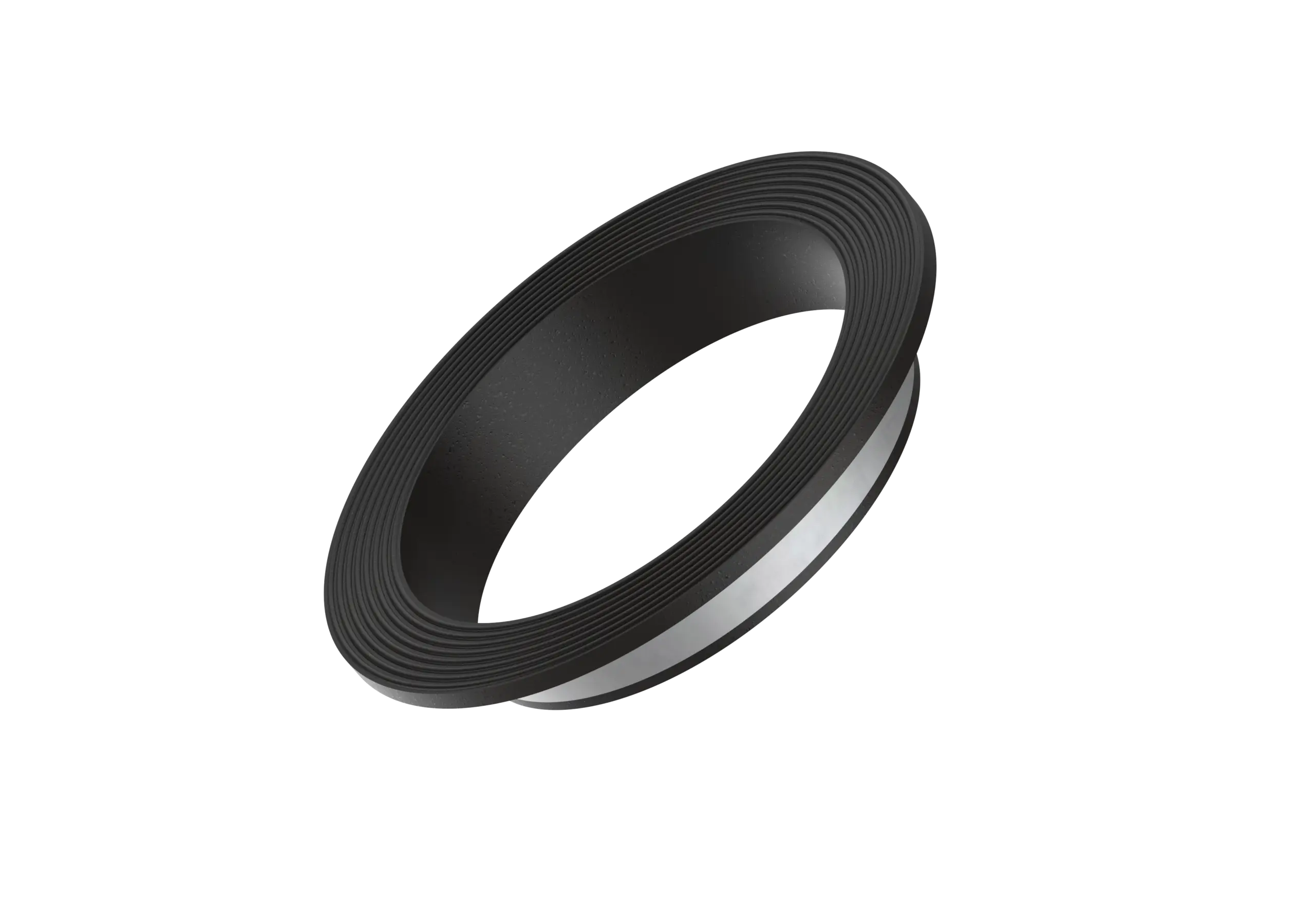
Why does a seal start leaking?
A leak does not always mean that the seal material is wrong.
Other causes can include:
- incorrect dimensions,
- insufficient or uneven compression,
- damage to mating surfaces,
- incorrect installation,
- seal deformation,
- exceeding operating parameters,
- material incompatibility with the medium,
- wear resulting from long-term service.
If a new seal starts leaking in the same place as the previous one, it is worth checking not only the seal material but the complete connection design and installation method.
Rubber seal vs pinch-valve sleeve
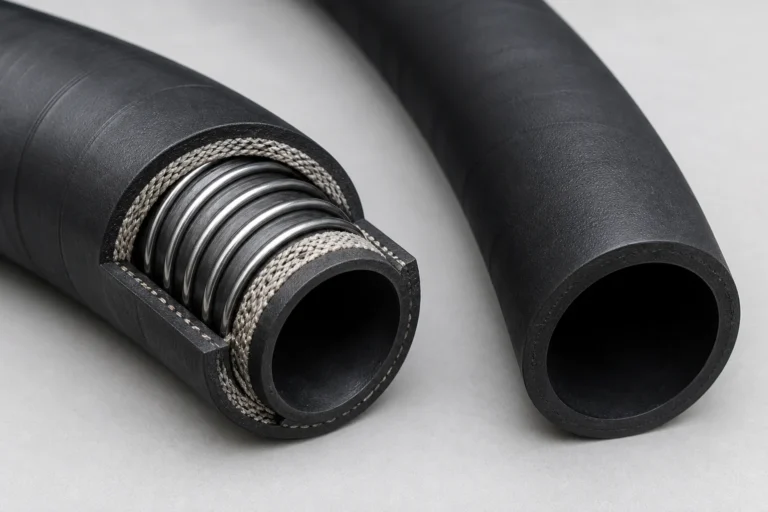
Rubber seals used in connections must be distinguished from rubber sleeves for pinch valves.
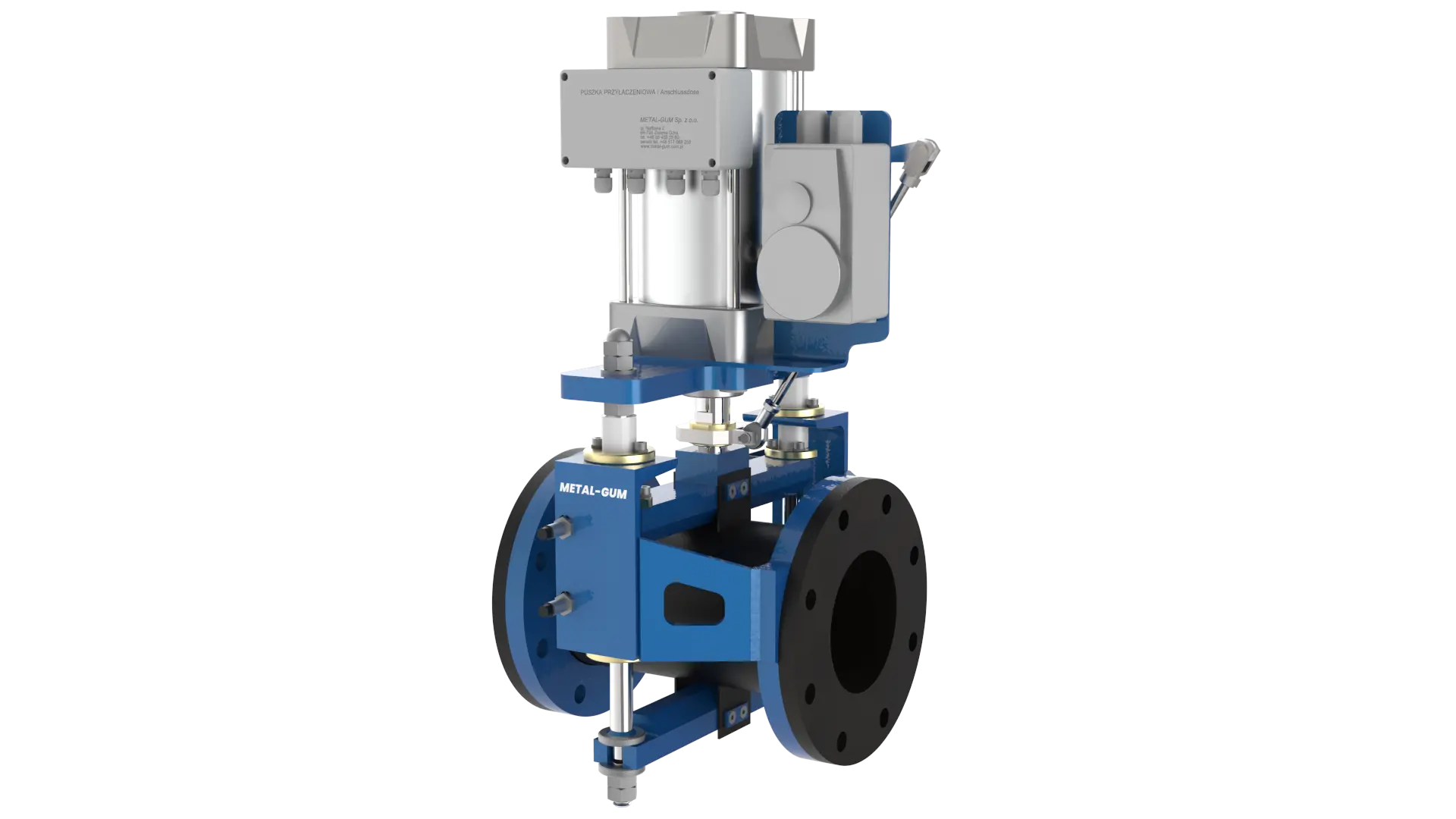
The pinch-valve sleeve is a working component. It is in direct contact with the medium and is pinched to shut off the flow. When the valve opens, it returns to its original shape and allows flow through the full bore.
NR, EPDM, NBR and SBR are among the compounds used for sleeves, but the material is selected for the medium and operating parameters of the specific valve.
The specification of a valve sleeve must therefore not be treated as a universal specification for all rubber seals.
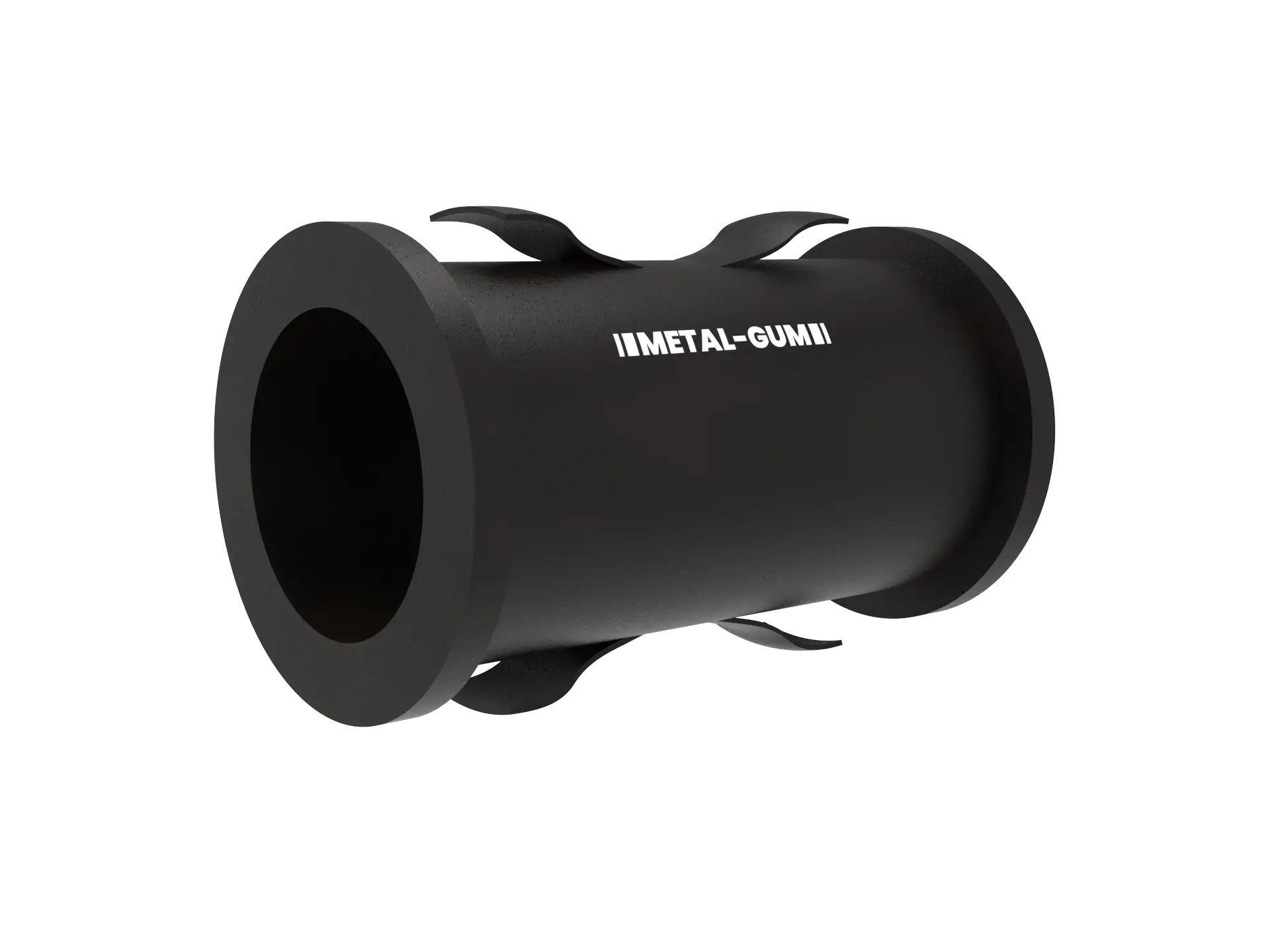
Rubber seals for industrial valves and fittings
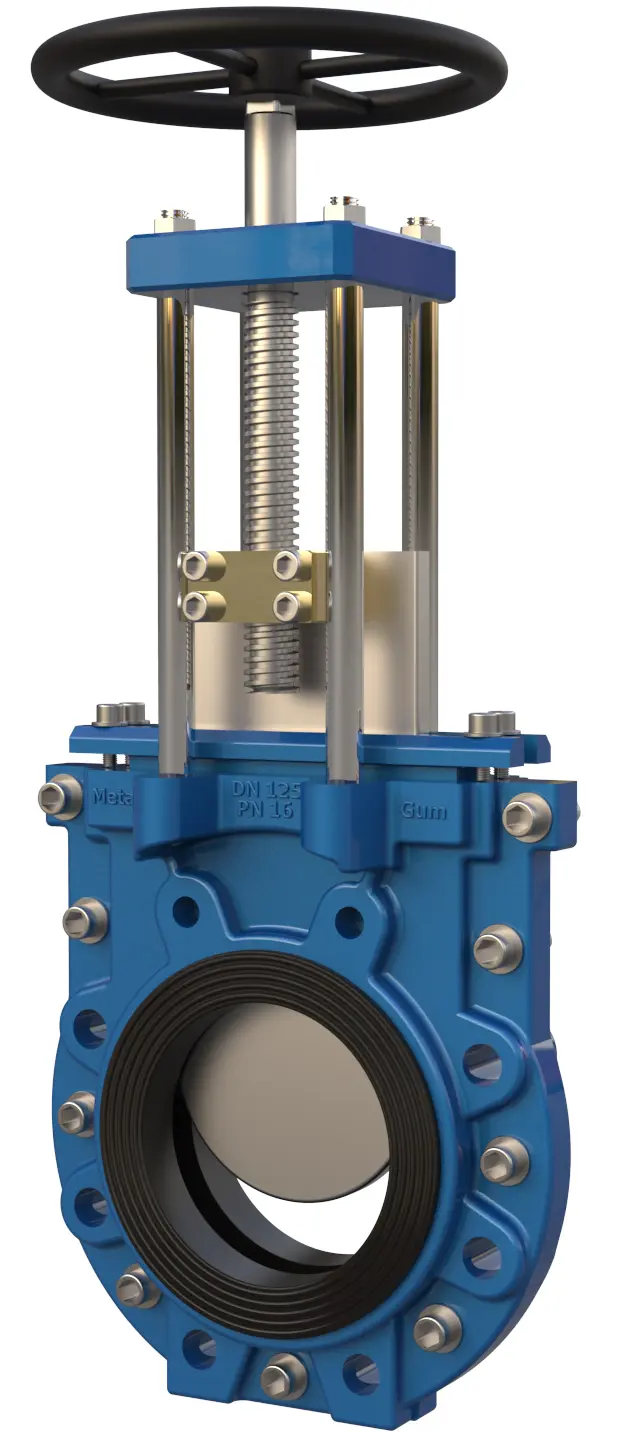
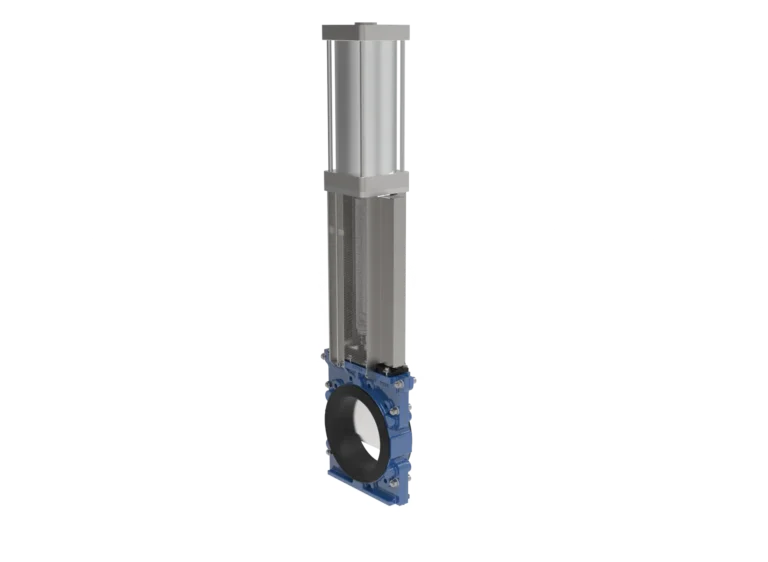
Rubber seals can be used in different types of valves, fittings and connections. Depending on the installation design, they can seal between flanges, valve components or other mating surfaces.
For unusual or demanding applications, the complete system must be defined, not only the rubber component itself.
When ordering, provide the equipment type, application location, seal dimensions and the medium and installation operating parameters.
How do you select the right seal?
For the correct execution, provide:
- The type of equipment or connection.
- Seal dimensions or a technical drawing.
- Medium type and concentration.
- Operating temperature.
- Working pressure.
- Information about solid particles, oils or other substances that may affect the rubber.
- Whether the seal is for a new installation or is replacing a worn component.
If the replaced seal failed, it is worth including a photograph. The nature of the damage — for example cracking, flattening, crumbling or surface wear — may provide additional information when selecting the next execution.
Metal-Gum rubber seals
Metal-Gum supplies rubber seals for industrial valves, fittings and installations, selected for material, dimensions and operating conditions.
Depending on the application, executions are available in different rubber compounds, including EPDM, NBR, NR and SBR. Components can also be manufactured from documentation or the dimensions of an existing part.
If you are unsure which material or dimensions are suitable, send a photograph, seal dimensions and information about the medium, temperature and working pressure. This helps determine the right direction for selection.
Need a seal for industrial valves or fittings?
If you are looking for a rubber seal for existing valves or fittings, or need a component made to a specific dimension, send Metal-Gum the basic information about the connection and operating conditions.
The more information is available about the application, the easier it is to select the correct seal material and execution.