
METAL-GUM / INDUSTRIAL VALVES
Industrial valves — Zielona Góra
We select industrial valves for the medium, the operating parameters and the installation method. For wastewater, sludge, slurries or media containing suspended solids, the nominal diameter alone is not enough: correct operation also depends on the design of the shut-off element, the materials of the wetted parts and the conditions under which the valve has to close. At our plant in Zielona Góra, we select pinch valves, knife gate valves and replaceable rubber sleeves for the specific conditions of an installation.
Pinch valve and knife gate valve — two different ways of shutting off flow
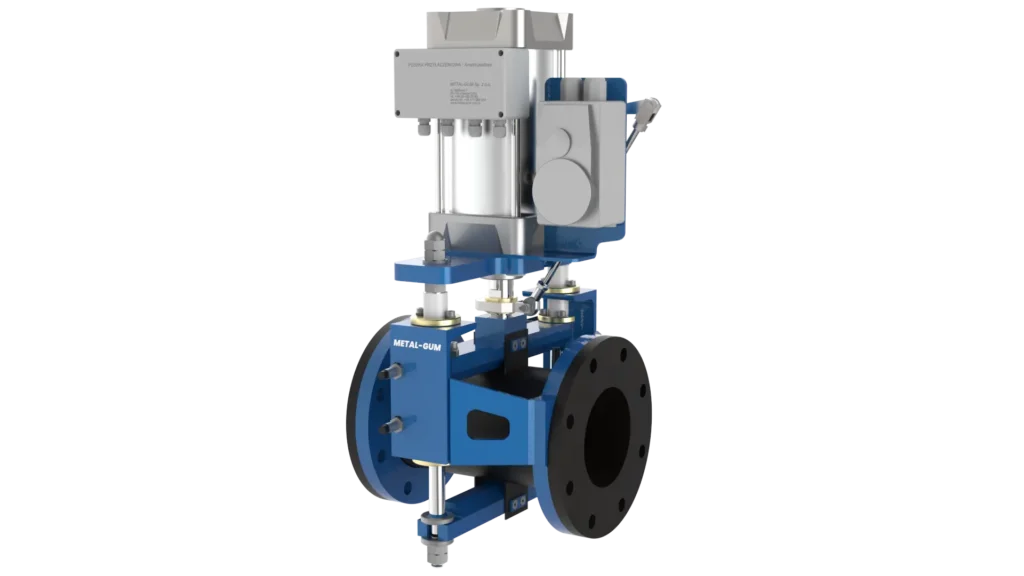
A pinch valve shuts off flow by squeezing a flexible sleeve. The medium flows inside the sleeve, so its material and geometry have a direct effect on the service life of the valve in a given application. This solution works well with media that contain solids or suspensions and with abrasive media, provided that the sleeve is properly selected for the process.
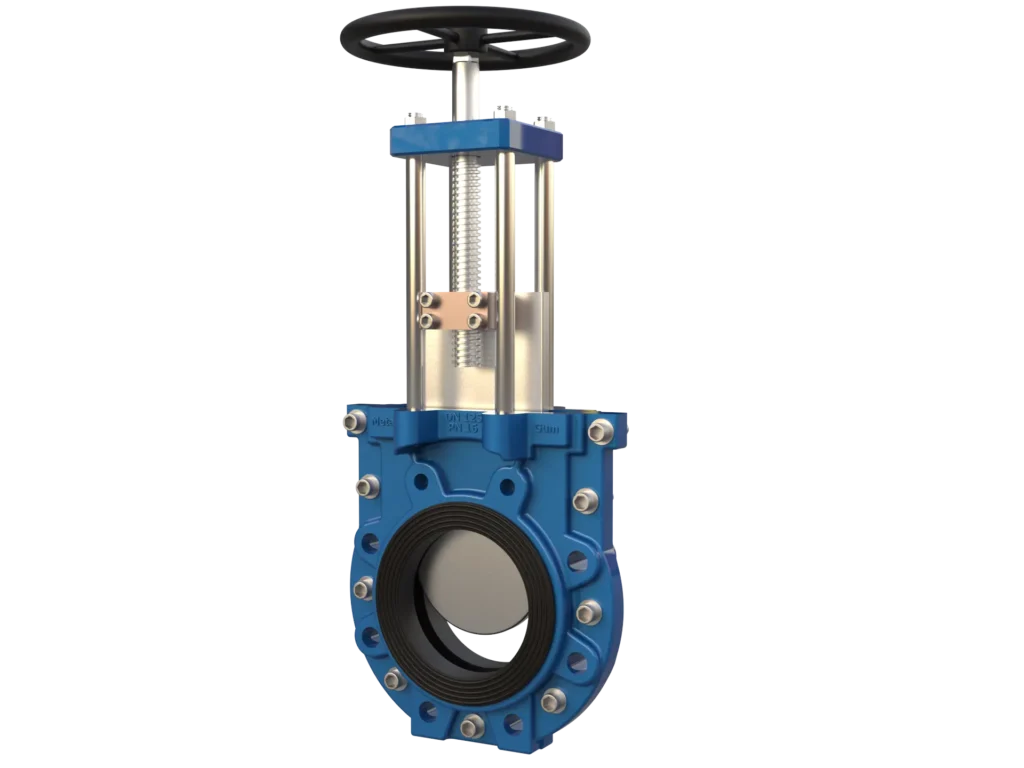
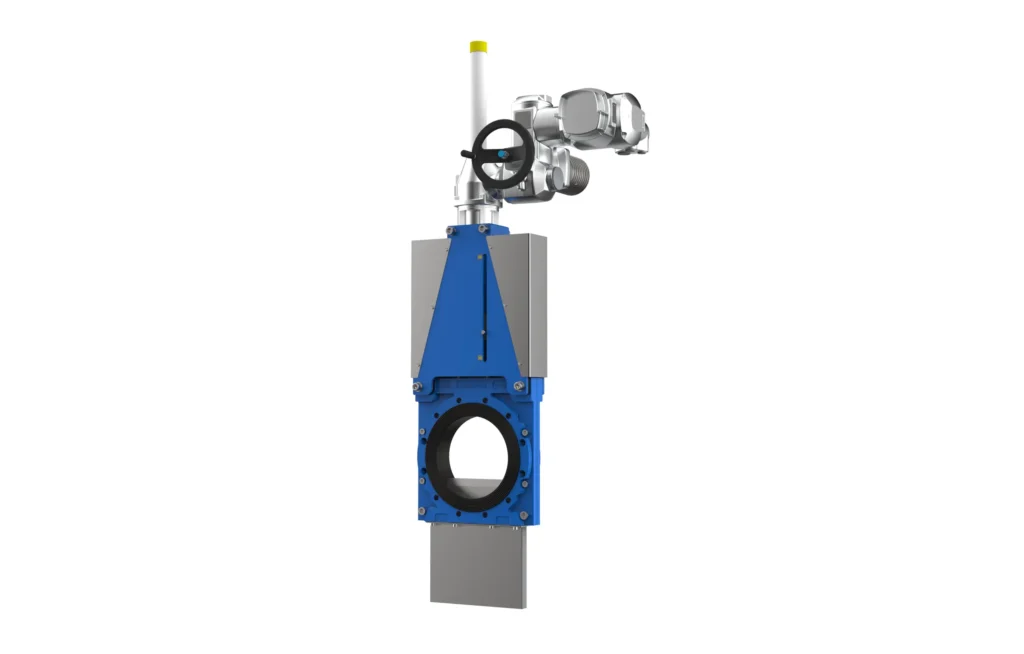
In a knife gate valve, flow is shut off by a plate moving across the flow path. This design is used, among other applications, for contaminated water, wastewater, sludge, slurries and fibrous media. Selection depends not only on DN and PN, but also on the differential pressure at closing, the required tightness, the body and knife materials, and the design of the seal.
Ranges of selected Metal-Gum models
The data below shows the catalogue ranges of the listed models and of the knife gate valve family. It does not mean that every possible combination of DN, pressure, material and design is available — we always relate the configuration to the conditions of the specific installation.
| Product | Nominal diameters | Nominal pressure | Body |
|---|---|---|---|
| ZPL pinch valves | DN32–DN100 | up to PN16 | cast iron GJL-250 |
| Vice Flow Duo 0.2 | DN80–DN300 | up to PN16 | cast iron EN-GJS-500-7 |
| Vice Flow Duo 0.3 | DN80–DN450 | up to PN16 | steel |
| Knife gate valves | DN50–DN1000 | PN10 | cast iron, carbon steel or stainless steel — depending on the design |
Other solutions are available in the Metal-Gum product range. During selection, we relate the catalogue range to the medium, temperature, pressure, diameter and shut-off conditions.
The rubber sleeve as the working part of a pinch valve
In a pinch valve, the medium is in contact with the flexible sleeve, and the flow is shut off by squeezing the sleeve from the outside. Sleeve wear therefore does not have to mean replacing the entire valve body. If the condition of the other components allows further operation, we replace the working part and keep the rest of the assembly.
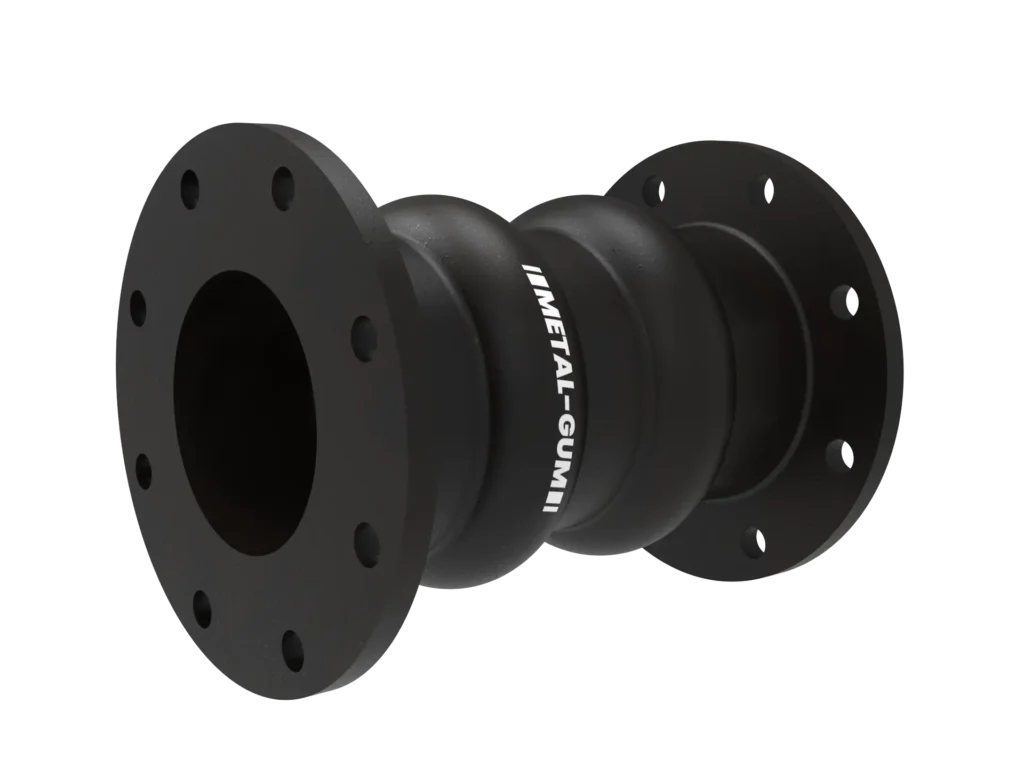
We offer rubber sleeves for pinch valves in drilled, undrilled, double-arch and conical versions. Depending on the application, NR, EPDM, NBR and SBR compounds are used. To select a spare part, we need the valve model, the mounting method and the functional dimensions. The parameters of one sleeve should not be automatically transferred to another version.
Knife gate valve — we select the design and the actuator as one assembly
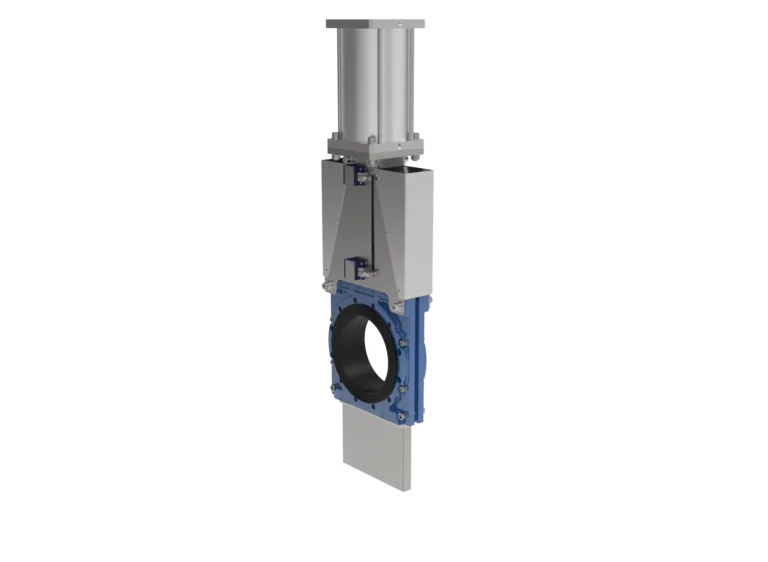
For a knife gate valve, the actuator is not an add-on chosen solely by diameter. The force needed to move the knife depends on the valve design, the differential pressure, the type of medium, the condition of the seals and the operating conditions. That is why we consider the mechanical design and the control method together.
The current knife gate valve family is available with manual, electric, pneumatic and remote-linkage actuators. With automatic actuators, you also need to specify the available power supply, the required control method, the cycle frequency and the space needed for installation and servicing.
We describe the design criteria in more detail in the article “Industrial gate valves – selection of design, materials and operating parameters”, and connection and actuator issues in “Flanged and wafer-mounted gate valves – installation and actuator selection”.
What data should be provided for valve selection?
- The medium, its composition and the presence of solids, fibres, deposits or an abrasive phase.
- The operating pressure, the maximum differential pressure at shut-off and the operating temperature.
- DN, PN, the connection type, the face-to-face length and the available installation space.
- The required tightness, the operating frequency and the expected control method.
- When replacing existing valves: the device designation, a drawing or photos, and a description of the operating problem.
If the starting point is a worn sleeve, deposit build-up, uneven wear or difficulty in achieving full shut-off, it is worth describing this symptom in the enquiry. Information about the wear pattern often helps to link the selection of a new version to the actual cause of the problem in the installation.
Metal-Gum industrial valves — Zielona Góra
Our plant and sales department are located at 2 Naftowa Street, 65-705 Zielona Góra, Poland. We handle technical enquiries Monday to Friday, 7:00–15:00, by phone at +48 68 458 55 70 and by e-mail at bok@metal-gum.com.pl.
You can also send an enquiry via the contact form. You can start with a specific model or with a description of a problem with existing valves. If the installation documentation is incomplete, attach photos, visible markings and the available dimensions — on this basis, we will determine what further data is needed for selection.
Questions before ordering
Does a worn sleeve mean that the entire valve has to be replaced?
No. The sleeve is a replaceable part, and its wear does not have to mean replacing the body. Before ordering, however, we check the correct sleeve version and the condition of the other valve components. The model designation, the mounting method and the functional dimensions are the basis for selecting the right spare part.
Does the PN in the table define the permissible differential pressure at closing?
No. The nominal rating does not replace data on the shut-off conditions. For a gate valve, what matters is the actual differential pressure, the temperature, the medium and the tightness requirements. We relate these values to the specific valve design, regardless of the parameters of the pipeline connection itself.
How do I start an enquiry if I do not know the designation of the old device?
Send photos of the valve, an available drawing or a sketch of the installation, visible markings and a description of the problem that the replacement is meant to solve. If the device has been modified in the past or the documentation is incomplete, mention this in the enquiry. This allows us to separate confirmed data from dimensions and parameters that require further agreement.