Selection of the complete knife gate valve execution for a chemical environment.
01 / INTRODUCTION
Chemical resistance applies to the complete valve
The term “acid-resistant gate valve” is a convenient shorthand, but it does not mean one universal material or a separate class of gate valves. Chemical resistance is assessed for a specific execution and for a precisely described medium: its composition, concentration, temperature and flow conditions.
The body material alone does not determine the resistance of the knife, seat, circumferential seal, packing or other wetted parts. All components that come into contact with the medium must form a coherent material system.
The statement “stainless steel body” is not confirmation of the chemical resistance of the complete gate valve.
What affects selection
- exact medium composition, component concentrations and process contaminants;
- temperature, pressure, flow velocity and contact time;
- simultaneous effects of corrosion, abrasion, deposits and frequent cycling;
- flushing, cleaning, standstill and installation environment conditions.
02 / MATERIALS
Each component requires separate assessment
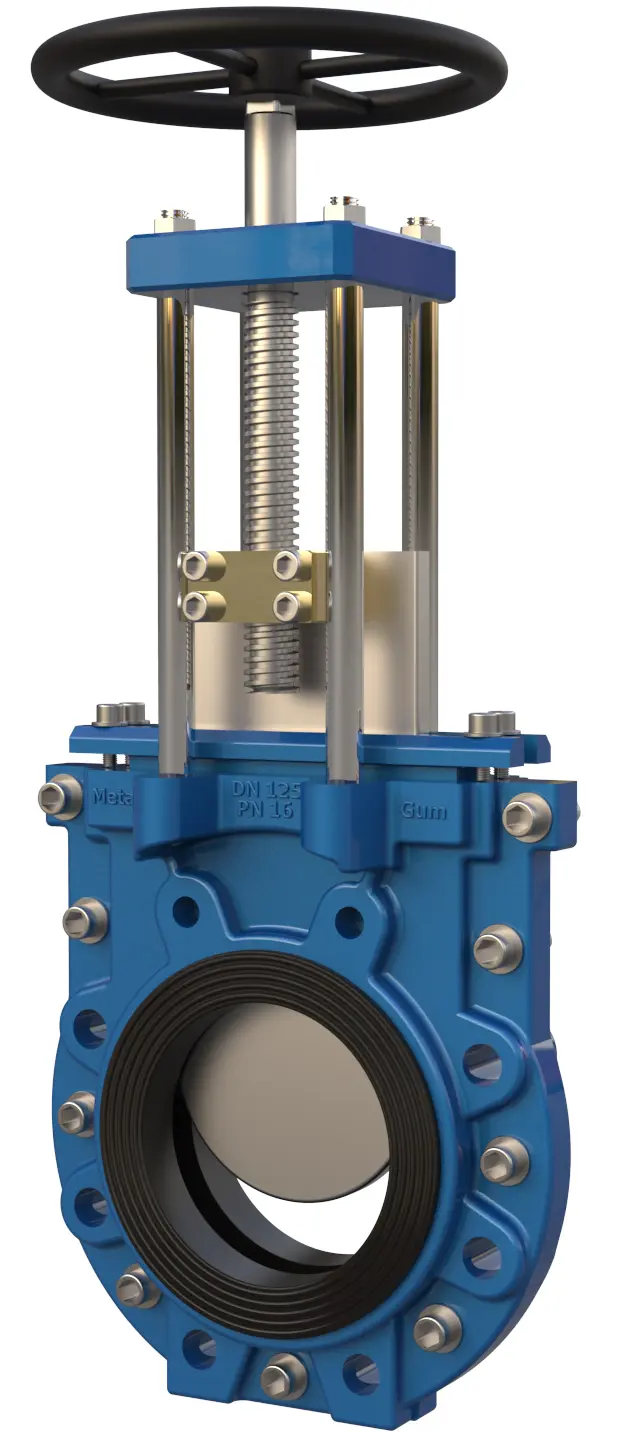
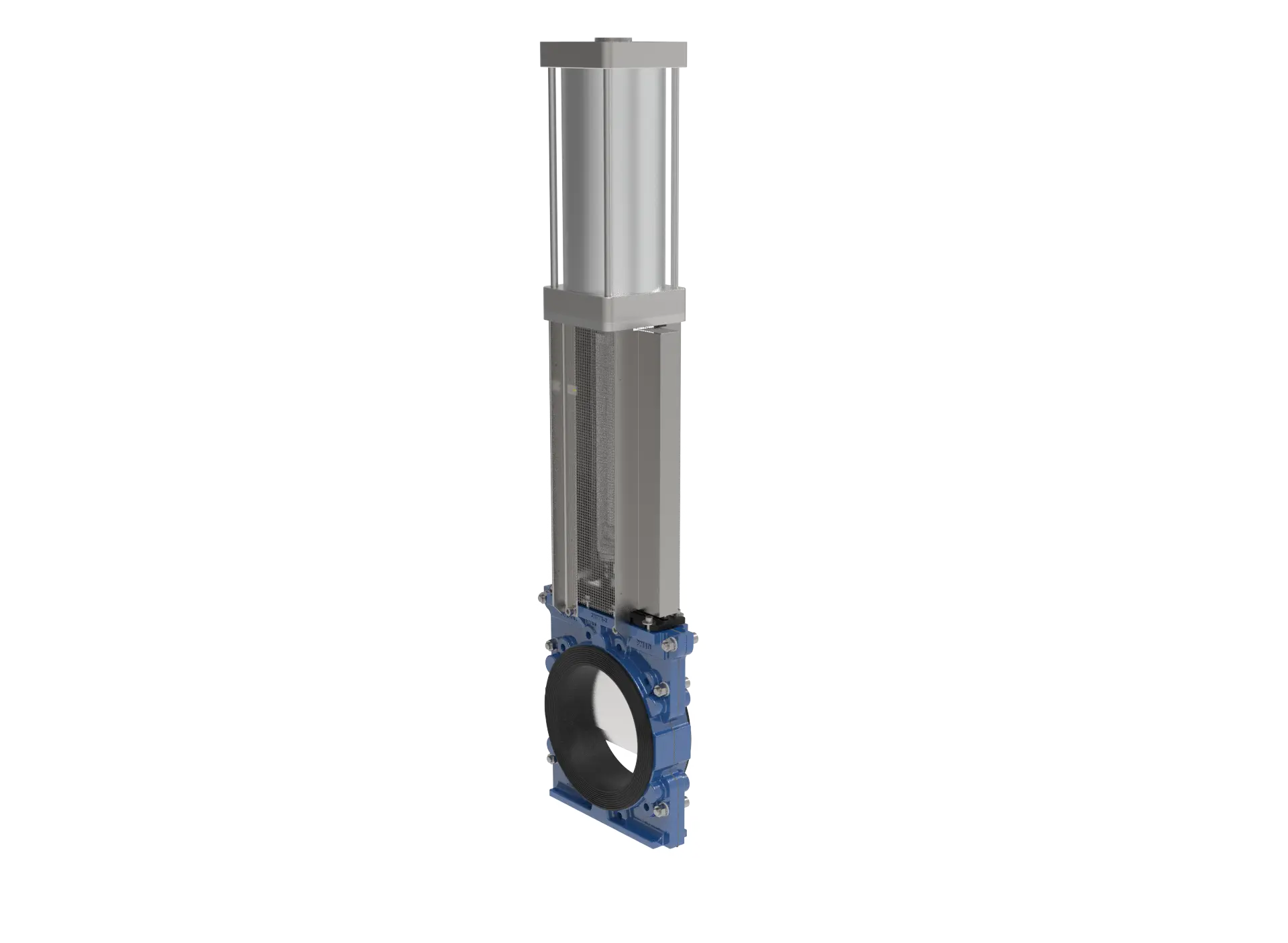
A knife gate valve combines metal and elastomer components with different functions. Depending on the design, the medium may come into contact with the body, knife, seat, packing and seals. The material list is therefore a starting point for analysis, not a chemical-resistance table.
| Component | Published range | What to confirm |
|---|---|---|
| Body | cast iron, carbon steel or stainless steel | grade, surface protection and contact with the medium |
| Knife | stainless steel 1.4301 or 1.4404 | compatibility with medium composition, temperature and abrasion |
| Seal | EPDM, NBR or profiled execution | elastomer, temperature, cleaning chemistry and required tightness |
| Other wetted parts | depending on execution | seat, packing and internal-component materials |
Soft profile versus sealing material
The term “soft profile” describes the seal construction, not a specific elastomer. The order should state the sealing type and, separately, the material selected for the medium and temperature.
Why is 1.4404 not a universal material?
In many environments, 1.4404 stainless steel provides broader corrosion resistance than 1.4301, but it is not resistant to every medium described as acidic. The substance, concentration, temperature, chlorides, aeration, contact time and surface condition all matter.
A lower concentration does not always mean milder conditions. For some substances, aggressiveness changes non-linearly with concentration and temperature. The medium name or pH value alone is not sufficient to approve a material.
03 / PROCESS DATA
Information required for responsible selection
| 1. Medium composition | full composition, pH, concentrations and possible contaminants, including chlorides |
|---|---|
| 2. Concentration range | operating values, process deviations and start-up conditions |
| 3. Temperature | continuous operation, peak values, duration of peaks and cleaning cycles |
| 4. Pressure | operating pressure, maximum pressure and maximum differential pressure across the closed knife |
| 5. Flow | direction, flow rate, medium velocity and possibility of reverse flow |
| 6. Solids | crystals, deposits, fibres, particle size, hardness and concentration |
| 7. Cleaning and flushing | chemical composition, temperature, pressure and contact time |
| 8. Operation | number of cycles, standstill periods, medium retention and external conditions |
| 9. Tightness | required level of tightness and consequences of any leakage |
If the installation operates in several modes, each mode must be assessed separately. A short cleaning cycle may be more demanding on materials than normal production.
04 / CONNECTIONS
What compliance with EN 1092-1 means
Metal-Gum knife gate valves are intended for between-flange installation. A reference to EN 1092-1 means adaptation to the connection dimensions of PN-designated circular steel flanges.
The standard specifies, among other things, flange types and dimensions, sealing faces, hole patterns, tolerances, materials and pressure-temperature relationships. It is not a chemical-resistance standard for the valve and does not confirm compatibility of the body, knife or seals with the medium.
The PN designation of the connection does not replace verification of the permissible differential pressure acting on the closed knife.
05 / EXECUTION PARAMETERS
Pressure, installation direction and tightness
For a specific execution, confirm operating pressure, maximum pressure, maximum differential pressure, flow and installation direction, and the required tightness level. Connection parameters and operating parameters of the complete assembly are separate matters.
The basic published range for Metal-Gum knife gate valves includes DN50-DN1000, PN10, between-flange installation, and manual, electric, pneumatic and pull-chain actuators. The configuration must be confirmed for the specific enquiry.
06 / ACCEPTANCE
Material documentation and testing
The offer and order documentation should clearly state the materials of individual components and the agreed operating parameters. If the project requires material certificates, declarations, specific tests or additional acceptance documents, these requirements must be communicated before the offer is prepared.
Agreeing the documentation scope early makes it possible to confirm availability and include the required testing in the execution process.
07 / SELECTION
How a complete configuration is selected
| 1. Process description | medium composition, concentration and temperature in all operating modes |
|---|---|
| 2. Medium characteristics | deposits, crystals, fibres, solids and abrasive properties |
| 3. Hydraulic conditions | DN, pressure, differential pressure, flow direction and tightness |
| 4. Materials | body, knife, seat, packing and seals |
| 5. Actuator | cycling frequency, closing time, control and state after loss of energy |
| 6. Installation | length, orientation, connections and installation/service space |
| 7. Acceptance | documentation, tests and acceptance criteria required by the project |
| 8. Confirmation | unambiguous record of the accepted execution in the offer and order |
The actuator is also part of the selection
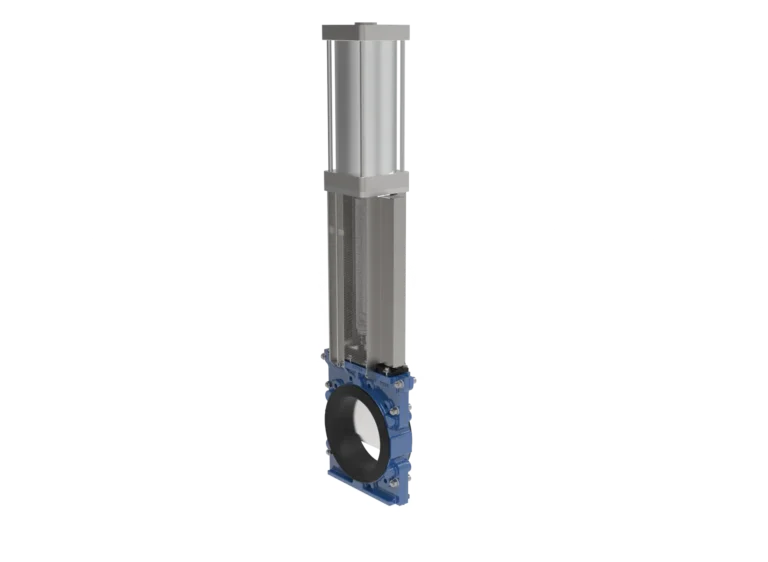
A manual actuator is suitable for local operation and a lower number of cycles. An electric actuator enables integration with automation, while a pneumatic actuator is used where fast actuation is important. A pull-chain actuator can make operation easier in locations with restricted access.
Regardless of actuator type, the actuation time, control signals, available power supply and required valve position after loss of power must be specified.
08 / PRACTICE
Mistakes that lead to incorrect selection
- considering the complete valve chemically resistant solely because of the body material;
- selecting 1.4404 steel without data on concentration, temperature, chlorides and contact time;
- selecting an elastomer only from pH or the general name of the medium;
- omitting the chemistry and temperature of flushing and cleaning cycles;
- treating the flange PN designation as the permissible differential pressure across the closed knife;
- omitting information about deposits, crystals, fibres and abrasive action;
- ordering without an unambiguous specification of materials and acceptance documents.
09 / FAQ
Frequently asked questions
Is a stainless steel body enough?
No. The knife, seat, packing, seals and other wetted parts must also be assessed.
Is 1.4404 suitable for every acid?
No. Suitability depends on the substance, concentration, temperature, contaminants, flow and contact time.
Does EN 1092-1 confirm chemical resistance?
No. The standard concerns steel flanges and their connection parameters, not the chemical resistance of the complete gate valve.
Is the medium pH enough?
No. The full composition, component concentrations, temperature and information about all operating modes are required.
Selection should end with specification of the materials of all wetted parts and confirmation of the parameters of the complete gate valve.
Sales department +48 68 458 55 70 bok@metal-gum.com.pl metal-gum.com.pl