A practical guide to selecting a gate valve for the medium and installation
The choice between a knife gate valve and a wedge gate valve should not be based solely on the name of the valve.
What matters most is what flows through the pipeline and the conditions in which the installation operates. In practice, knife gate valves are particularly useful for media containing fibres, slurry, suspensions and other contaminants. Wedge gate valves, on the other hand, are a common choice in installations with clean media, where the closing element can work correctly with the seats.
When does a knife gate valve make sense?
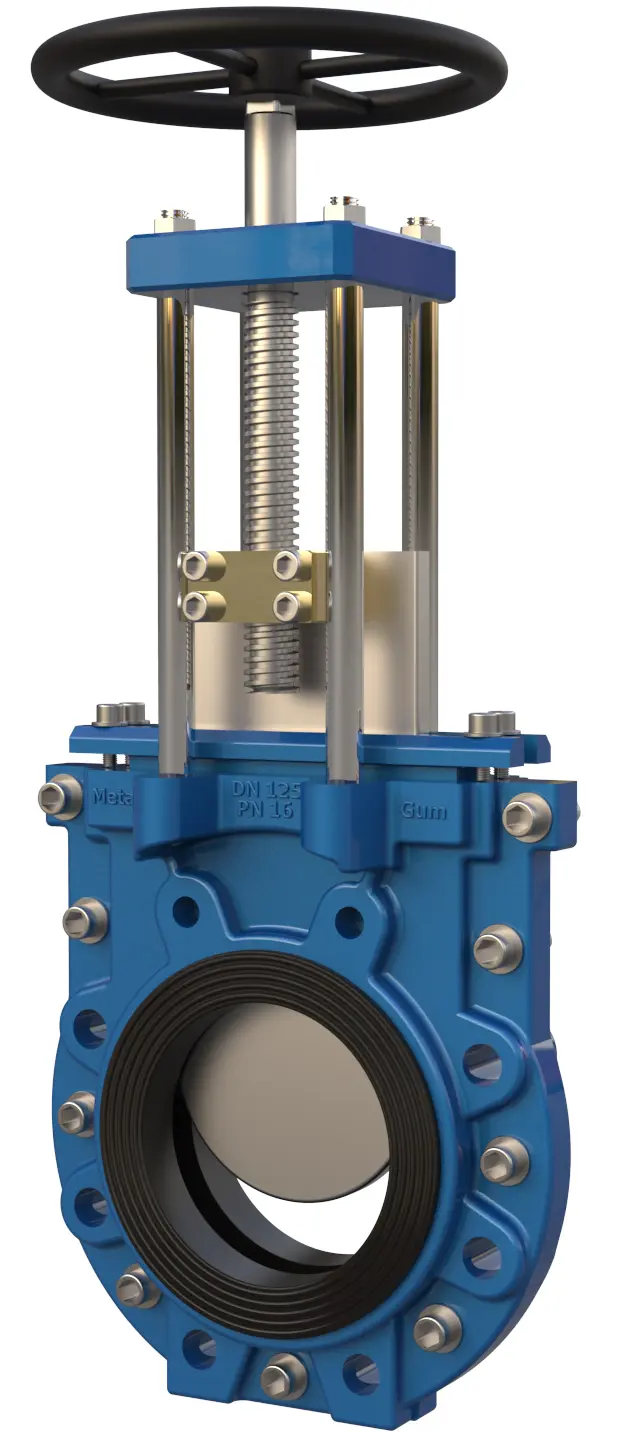
A knife gate valve uses a plate called a knife, which moves across the direction of flow. This design works well where the medium may contain fibres, sediment or suspension.
- wastewater and contaminated water
- slurries and sediments
- fibrous media
- pulps and suspensions
- semi-liquid media in which solid particles may be present
An advantage of the knife design is its ability to cut fibres and move the plate through contaminated media. This does not mean, however, that every knife gate valve is suitable for every slurry or abrasive medium. Selection must take into account, among other things, abrasiveness, temperature, pressure, medium composition, and the material and design of the sealing.
When should you consider a wedge gate valve?
A wedge gate valve closes the flow using a wedge that seats against the seat surfaces. It is a classic solution used primarily in installations with clean or relatively clean media.
- water and other clean media
- installations where there is no significant risk of contaminants depositing in the seat
- systems where the wedge and seat design meets the required tightness, pressure and temperature
If the medium contains sediment, fibres or a larger amount of solid particles, particular attention must be paid to the possibility of their depositing in the seat area. Contaminants may make it difficult for the wedge to seat fully, increase wear of the sealing surfaces and, as a consequence, reduce tightness.
The key difference: behaviour with contaminated media
A simple rule of thumb is this: the more fibres, slurry and suspension there are in the medium, the more worthwhile it is to consider a knife gate valve. If the medium is clean and does not cause material to deposit in the seat area, a wedge gate valve can be a very good solution.
This is not a rigid rule, however. The final choice should always result from the parameters of the specific installation and the documentation of the selected design.
Knife gate valve vs wedge gate valve – comparison
| Criterion | Knife gate valve | Wedge gate valve |
|---|---|---|
| Closing element | Plate (knife) moving across the flow channel. | Wedge seating against the seat surfaces. |
| Media with fibres and suspensions | Usually the more favourable solution; the knife design is intended to work with such media. | Requires checking the risk of material depositing in the seat area. |
| Clean media | May be used if the design parameters are suitable. | A typical and commonly used solution. |
| Risk of deposits in the closing area | Depends on the knife design, sealing and type of medium. | Important with media containing sediment and solid particles. |
| Typical advantage | Good operation with contaminated and fibrous media. | Classic design for installations with clean media. |
| Material selection | The body, knife and sealing should be selected for the medium and temperature. | The body, wedge, seats and seals must suit the operating conditions. |
Flanged or wafer?
This is a separate issue from choosing between a knife gate valve and a wedge gate valve. The terms knife and wedge describe the design of the closing element, while flanged and wafer describe the way the valve is installed in the pipeline.
These features can therefore be considered independently: first determine which design best suits the medium and operating conditions, then select the appropriate connection method for the existing installation.
For a specific design, first check the DN, PN, spacing and type of connections, and the face-to-face length. If the valve is to replace existing equipment, it is worth comparing these dimensions with the documentation or measurements of the existing installation.
Available knife gate valve designs
For the knife gate valve family described here, the available range includes the following variants.
The data below should be treated as the product range and confirmed each time for the specific model and design.
- DN: 50–1000
- Nominal pressure: PN10
- Operating temperature: −10°C to +120°C
- Body: cast iron, carbon steel or stainless steel – depending on the design
- Knife: 1.4301 or 1.4404 stainless steel
- Sealing: EPDM, NBR or soft profile – depending on the design
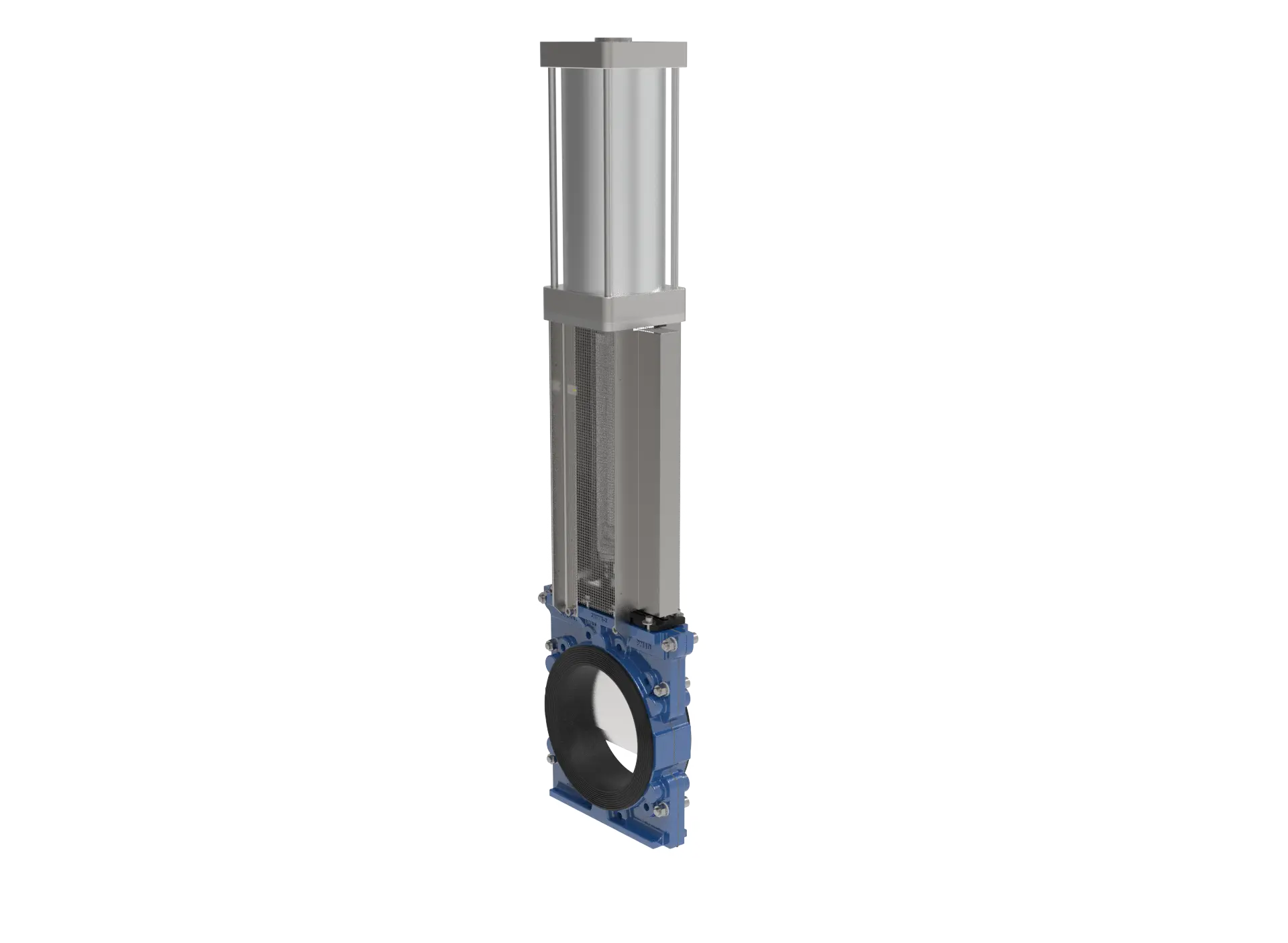
- Actuation: manual, electric, pneumatic or chain – depending on the design
- Installation: wafer, in accordance with the requirements of the specific design
What should be checked before selection?
To select a valve correctly, it is worth collecting several basic pieces of information:
- type and composition of the medium
- operating temperature
- working pressure and any pressure surges
- presence of fibres, sediment, suspension and abrasive particles
- required tightness after closing
- DN, PN and connection method
- available face-to-face length
- opening and closing frequency
- required actuator type
- installation position and access to the valve during servicing
Frequently asked questions
Is a knife gate valve suitable for slurry and sediment?
Yes – these media are among the typical applications of knife gate valves. The knife design is advantageous for media containing fibres, slurry and suspensions. For abrasive or aggressive media, however, the materials and sealing must be selected appropriately.
Can a wedge gate valve be used with a medium containing suspension?
It can, but the specific design must be checked. The risk of particles depositing in the seat area and the effect of this on full closure and valve durability are particularly important.
Is a flanged gate valve a separate type of gate valve?
No. “Flanged” describes the way the valve is connected to the pipeline, while “knife” and “wedge” refer to the design of the closing element.
Is a knife gate valve always better than a wedge gate valve?
No. A knife gate valve is not a universal replacement for a wedge gate valve. If the medium is clean and the installation requires parameters typical of a classic wedge gate valve, a wedge gate valve may be the more appropriate solution. With contaminated and fibrous media, the knife design often provides a clear advantage.
Summary
For clean media – consider a wedge gate valve.
For wastewater, slurry, suspensions and fibrous media – consider a knife gate valve first.
Then verify DN, PN, temperature, pressure, tightness, materials, installation method and actuation. Only comparing these parameters with the documentation of the specific model makes it possible to confirm the correct selection.
Note: The product-range parameters stated in this material should be confirmed in the current technical documentation for the specific design before ordering.